How to Set Achievable Goals: Breaking the ADHD Burnout Cycle
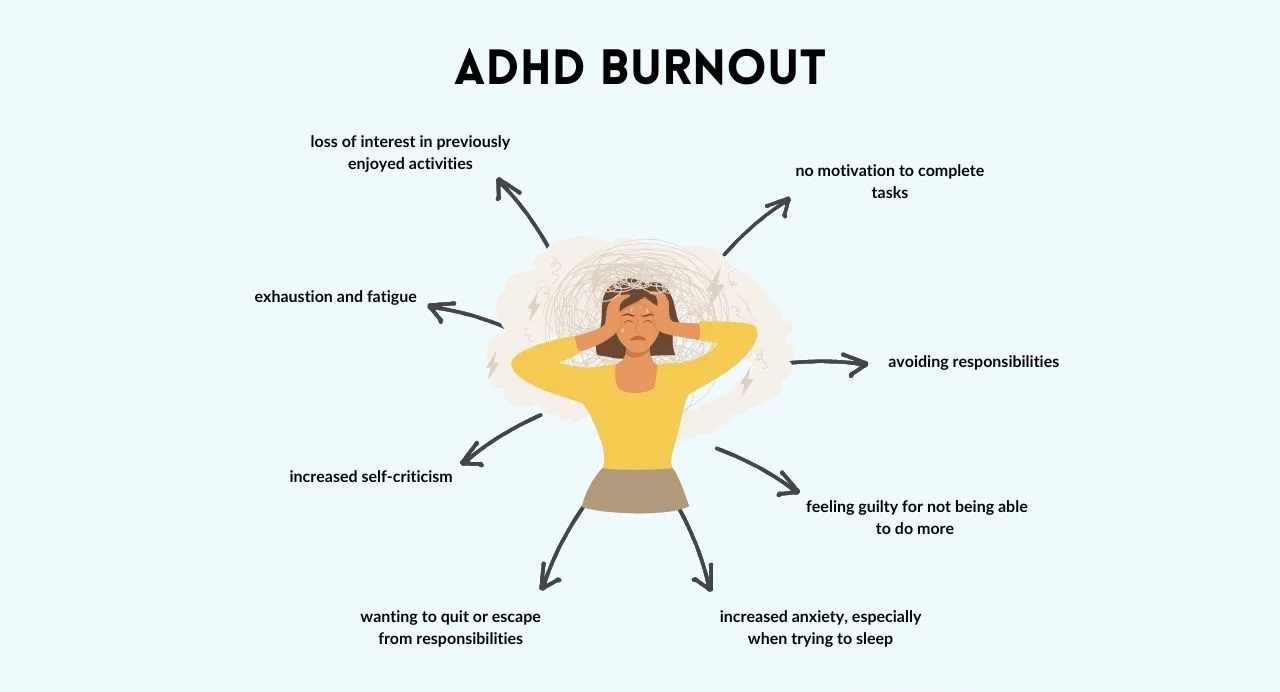
Living with ADHD can feel like running a marathon you never signed up for. Constantly juggling tasks, expectations, and emotions can wear anyone out. For those with ADHD, this often leads to a pattern called the Burnout Cycle, a draining loop of pushing too hard, crashing, and struggling to recover.
But here’s the good news: you can break free from it. Let’s explore what ADHD burnout is, how it affects you, and how setting achievable goals can help an ADHD mind regain control.
What Is ADHD Burnout and How to Identify It?
ADHD burnout isn’t just your average exhaustion. It’s a state of complete physical, mental, and emotional depletion caused by managing ADHD symptoms while trying to meet life’s demands. It often begins with bursts of energy and hyper-focus, where you try to do everything simultaneously. Then comes the crash, a wave of fatigue, irritability, and overwhelm, making even simple tasks impossible.
Symptoms include chronic tiredness, trouble concentrating, irritability, and physical aches like headaches. You may feel unmotivated, overly self-critical, or want to escape from everything.
How ADHD Burnout Affects the Brain
The ADHD brain works differently. It craves stimulation, leading to periods of hyper-focus followed by crashes. ADHD also often includes struggles with time management, organisation, and emotional regulation, all of which contribute to stress and burnout.
Think of your brain as a battery that drains faster than most. Without proper breaks or planning, it’s easy to feel depleted, making it tough to recover.
Breaking the ADHD Burnout Cycle with SMART Goals
For people with ADHD, vague goals can feel overwhelming. Breaking them into small, specific steps makes them easier to tackle. SMART goals (Specific, Measurable, Achievable, Relevant, and Time-bound) provide structure, helping you stay focused and avoid burnout.
Unstructured goals can drain energy, while clear, achievable ones create momentum and a sense of accomplishment. By setting ADHD-friendly goals, you regain control and reduce stress, one step at a time.
Effective ADHD Goal-Setting Ideas
- Keep It Realistic: Avoid massive, unrealistic goals. Start with small, manageable steps that reduce stress.
- Break It Down: ADHD brains thrive on smaller, actionable tasks. Instead of “cleaning the house,” try “tidying the desk” or “putting away laundry.”
- Set Deadlines: Deadlines create structure but should remain flexible. Focus on progress, not perfection.
- Write It Down: Use a planner, app, or sticky notes to make your goals tangible and easier to track.
- Focus on Strengths: Leverage ADHD traits like creativity and problem-solving to tackle your goals effectively.
Tools and Strategies for ADHD Time and Task Management
Productivity Tools for ADHD
Use tools like timers, habit trackers, and to-do lists to manage tasks. These act as helpful reminders, reducing the mental load of remembering everything.
ADHD Task Management Made Easy
Breaking tasks into smaller chunks ensures goals feel achievable. Colour-coded lists or visual charts can make organising easier and less overwhelming.
The Role of Mindfulness and Self-Compassion in Avoiding Burnout
Mindfulness exercises for ADHD adults, like deep breathing and guided meditation, help you focus and stay present. These exercises can reduce stress and improve mental clarity.
Struggling with ADHD burnout can lead to self-criticism. Practising self-compassion by recognising your efforts and speaking kindly to yourself helps rebuild confidence and maintain emotional well-being.
Conclusion: Building a Balanced Path Forward
ADHD burnout is tough, but it’s not insurmountable. You can break the cycle and regain balance by understanding your limits, setting realistic goals, and prioritising self-care. Progress isn’t about doing everything. It’s about focusing on what matters most, one step at a time.
Take a deep breath, start small, and credit yourself for showing up. You’ve got this!